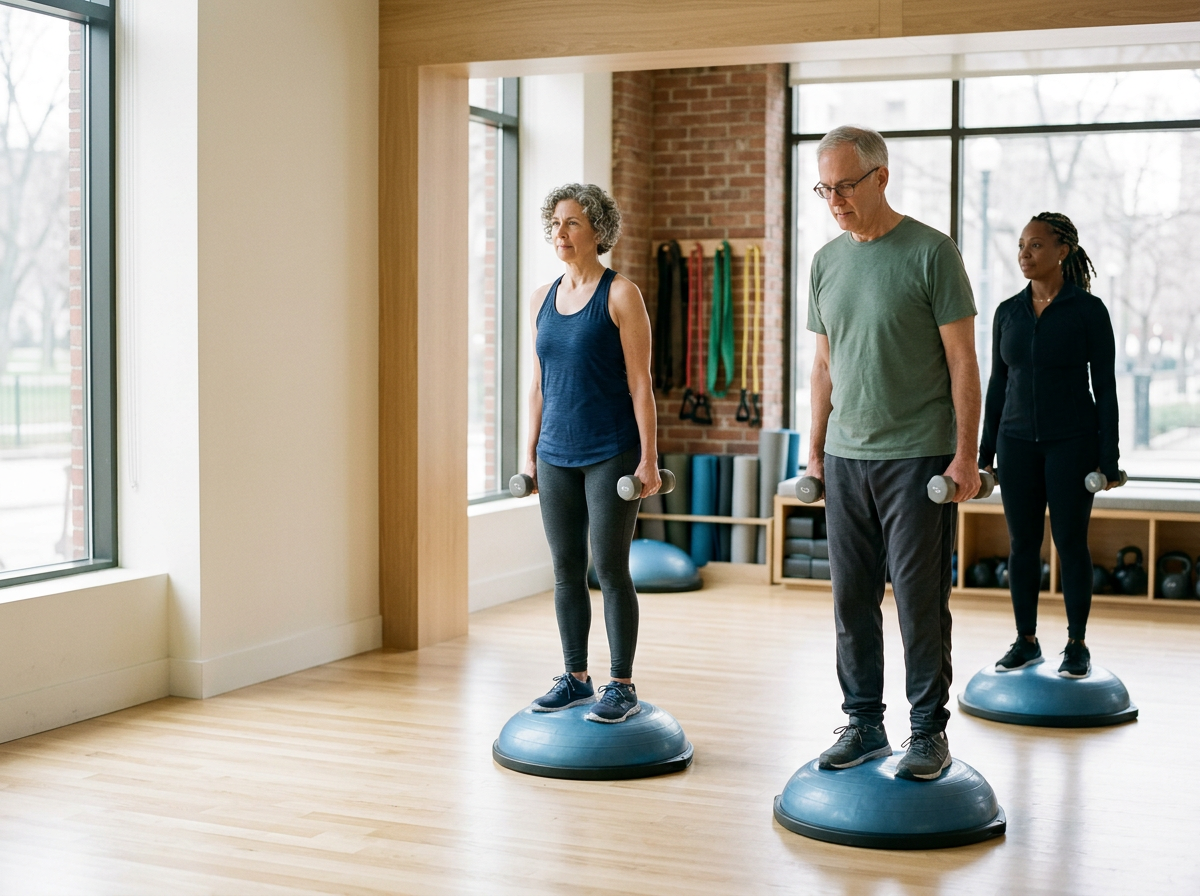
Revolutionize Your Fitness Journey
Who We Are
Is staying active at a high level as you age matter to you? Does having customized workout plan tailored for you sound appealing? Does wellness guidance add value to the lifestyle you are wanting to implement? Are you looking for a fitness program that provides results without breaking down your mind and body? Are your looking for a one stop solution for health education, recovery, and fitness? Then welcome, to More that Training.
Our Model
We help individuals who are looking for expert guidance in fitness, wellness, and nutrition utilizing a membership format. Membership can be purchased monthly. With a membership package, members can utilize the following:
Live one-on-one or group sessions in person or virtual
24/7 Coaching and feedback
Custom nutritional plans and assessment with consultation
Accountability from experienced clinicians and trainers with years of research based experience.
Monthly assessments to track progress, work through challenges, and modify your goals.
Access to other treatments for pain management and fitness performance
Individual assessments for strength, posture, and baseline vital signs.
Unlimited training
How are we different?
Affordability: Group classes are much more affordable than on-on-one sessions. However, if you want the one on one approach, we can accommodate.
Peer support: Group settings build accountability, motivation, camaraderie, and safe friendly competition, improving consistency and long‑term adherence.
Research based guidance: Certified trainers and therapists creating safe, adapted programs for varied fitness and joint integrity levels—older adults and returnees are our prime focus— However, we are eager to work with anyone seeking advisement.
Professional recovery: Interventions include research based treatments on manual body work, recovery planning, passive modalities— sauna and cold therapies included, and nutrition. Finally, our providers monitor fatigue and adjust workloads to prevent overtraining.
All in one format: This approach helps manage the three areas of wellness, Mind, body, and intake
Together, these elements yield safe and efficient progression, better adherence, less injuries, and sustainable lifestyle changes, keeping you performing at a high level.
Changing our Mindset -May 2026 Blog
I think everyone who is reading this blog has had experience setting resolutions goals regarding their health and wellness. Perhaps is was to loose 30 kgs, or lower your A1C to under 6. Be able to run my first ½ marathon. Whatever it its, it is clear that intentions mean well. However why is it that so many of us fail in meeting those goals.
In a study from, “The Learning Center,” at the University of North Carolina and MIT, researchers concluded the discovery of a three-step neurological pattern that forms for every habit we develop. The first is cue. It is a trigger in brain to go into automatic mode and prompts the behavior to unfold. Second, is routine, which is the behavior and the action you take. The last step is reward. It assists your brain to determine if the habit is worth remembering or not. Generally, habits have immediate or latent rewards.
Lets use a example of getting a text from someone you just met:
Cue: You get a text from your phone from someone you asked out last week
Routine: You open the text, because, you assigned them with a specific tone, the theme song for Star Wars. You both are huge fans.
Reward: Finding out she would love to go out with you next Tuesday, at 7pm for dinner.
Changing bad habits for good
Now that your understand how habits form, let’s explain how to change them.
Monday, Wednesdays, and Fridays, you signed up for a fitness class with your best friend. But instead of going the class you go to your favorite coffee shop with your friend to have latte’s. You know that you need to attend the fintess class because your are paying for it, however socializing with friends over coffee makes you happy. Your goal is to implement a routine that accounts for more workout time and yields the same happy feeling of hanging out with friends. But how might you do that?
One way would be to convince your friend to attend the class and have coffee after. Afterward, you could treat yourselves at Tim Hortons. Another routine would be to attend the class on your own and then meet your friend at the coffee shop later.
In either case, you replace a negative routine (going for coffee insread of working out) with a healthier one (going to the fitness class before ). By changing these routines, you keep the reward of socializing with your friends while gaining new ones: getting healthier. By changing your routine, you increase your chances of earning multiple rewards.
Let’s plug this new routine into the habit.
Cue: The time your class starts tells your brain which habit to employ. If you want to be extra ambitious, you could create a calendar notification on your computer or mobile device.
Routine: Attend class with friend or alone.
Reward: Socializing with friend over coffee after attending the fitness class.
Putting what we know into practice
The next step is to think about a habit you want to change. That begins by first describing the habit. Below are a few questions to help get you started. They were developed by Claiborn and Pedrick (2001), authors of The Habit Change Workbook.
Identify a habit you would like to change.
When did the habit begin, or when do you first remember doing it?
Has the habit changed over time? If so, describe the changes that you have noticed.
When do you typically engage in the habitual behavior (day and time)?
Do you engage in the habit in a specific location?
What else is usually happening in your life when the habit occurs?
Does your behavior affect other people or facets of your life?
What does the habit do for you?
How happy (or unhappy) are you as result of your habits, or what are the rewards.
Second, you need to understand how the habit operates by diagnosing its cue, routine and reward. This will help you to gain power over it and begin making changes you seek to make.
Because a habit is a formula that the mind automatically follows, you need to re-engineer that formula by creating a new habit. Think of a healthy routine by planning for the cue and choosing a behavioral pattern that yields the reward you want. You may provide a list of multiple routines before settling on one. In addition, the reward does not need to be overly elaborate. The goal is to establish a positive association with putting the habit into practice.
It is important to note that telling yourself there is a reward is not enough for a habit. According to Duhigg, one way to get a habit to stick is to repeat it. Repetition is important if you want your brain to crave the reward. He notes that “countless studies have shown that a cue and a reward, on their own, aren’t enough for a new habit to last. When your brain starts expecting the reward—craving the endorphins or sense of accomplishment—will it become automatic”
In a two-year study that examines the rate of self-change attempts of New Year’s resolvers, Norcross and Vangarelli (1988) note that 77% of resolution-makers maintained pledges for one week. However, only 19% of them kept their resolutions after two years. If this statistic is indicative of habits in general, “at least 8 times out of 10, you are more likely to fall back into your old habits and patterns than you are to stick with a new behavior” (Clear, 2015).
Creating a plan
Below are four simple steps for changing one habit at a time (Oliveira, 2015):
Choose one keystone habit and do it well. It is ideal to select one goal that will bring your life in line. Be sure to start with something easy to achieve and then slowly enhance the degree of difficulty.
Write down your plan: Try to create a habit loop: cue, routine and reward. Make visible what you will do each day. Remember to start off slow, focusing on creating ritual first and results second. Also, define success in measurable terms.
Make your goal public and develop a support team: Ask your family, friends or colleagues to help hold you accountable. Be sure to report your progress each day, either within a journal or through your favorite social media outlet.
Make a plan for when you falter. Write down what caused you to stumble. You want to be as honest as possible. Most importantly, don’t be afraid to start over with a revised plan.
How can technology help?
Need some help changing your habits? Technology can help you with various steps in the habit-formation process:
Calendars as Cues. Using an online calendar like Google Calendar, iCal, or Outlook 365 Calendar can help you schedule the habits you want to build. You can make events that recur monthly, weekly, or daily, and set reminders to let you know it’s time to get started on a task.
Apps. There are also apps designed specifically to help you form good habits, including Streaks, Habitshare, and Habitica. Many of these apps help you assess your habits, break them into small pieces, stay accountable, and reward you for completing your goals.